Gemini gave my readers homework
AI tools have added a new layer to the sender-recipient interaction.
A month before this publication, I sent a newsletter about the donut hole stage where writers struggle to describe what they make. I subscribe to my own newsletter from a few different addresses to see where it ends up and to read it with a fresh eye.
On one of them (Google Workspace), I opened the email to find Gemini had read it and decided it was an assignment. "Due March 18: Describe newsletter to five people."
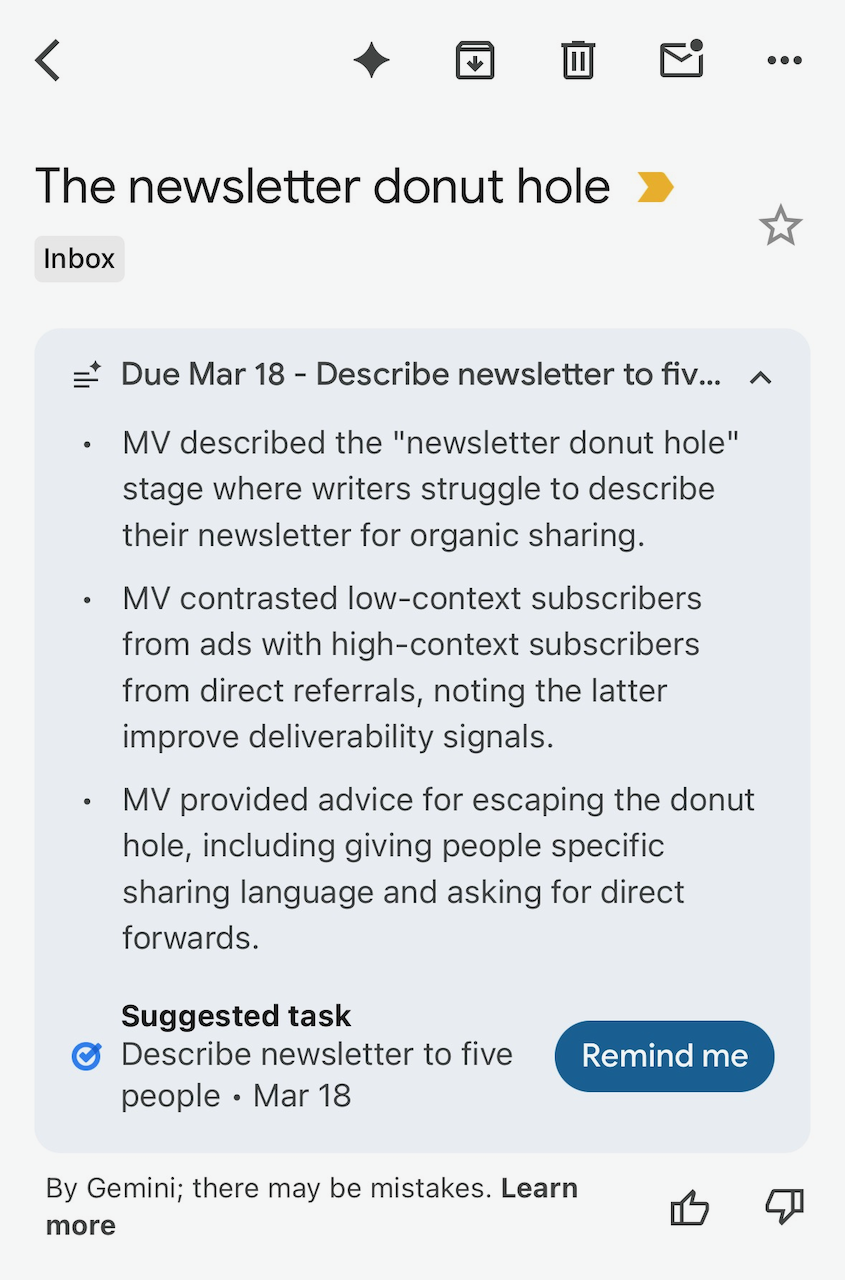
The "not so funny"
Here's the one that's not funny.
A couple of weeks ago, on an old iCloud alias I haven't used in years, I got a fake Microsoft 365 renewal notice. Someone had abused StreamYard's actual registration system, using the same playbook as the PayPal invoice scams to inject malicious content into a legitimate confirmation email.
The email passed every authentication check because it really did come from StreamYard. Real DKIM. Real SPF. Real infrastructure.
The scam was injected through a user-input field in StreamYard's own confirmation flow.
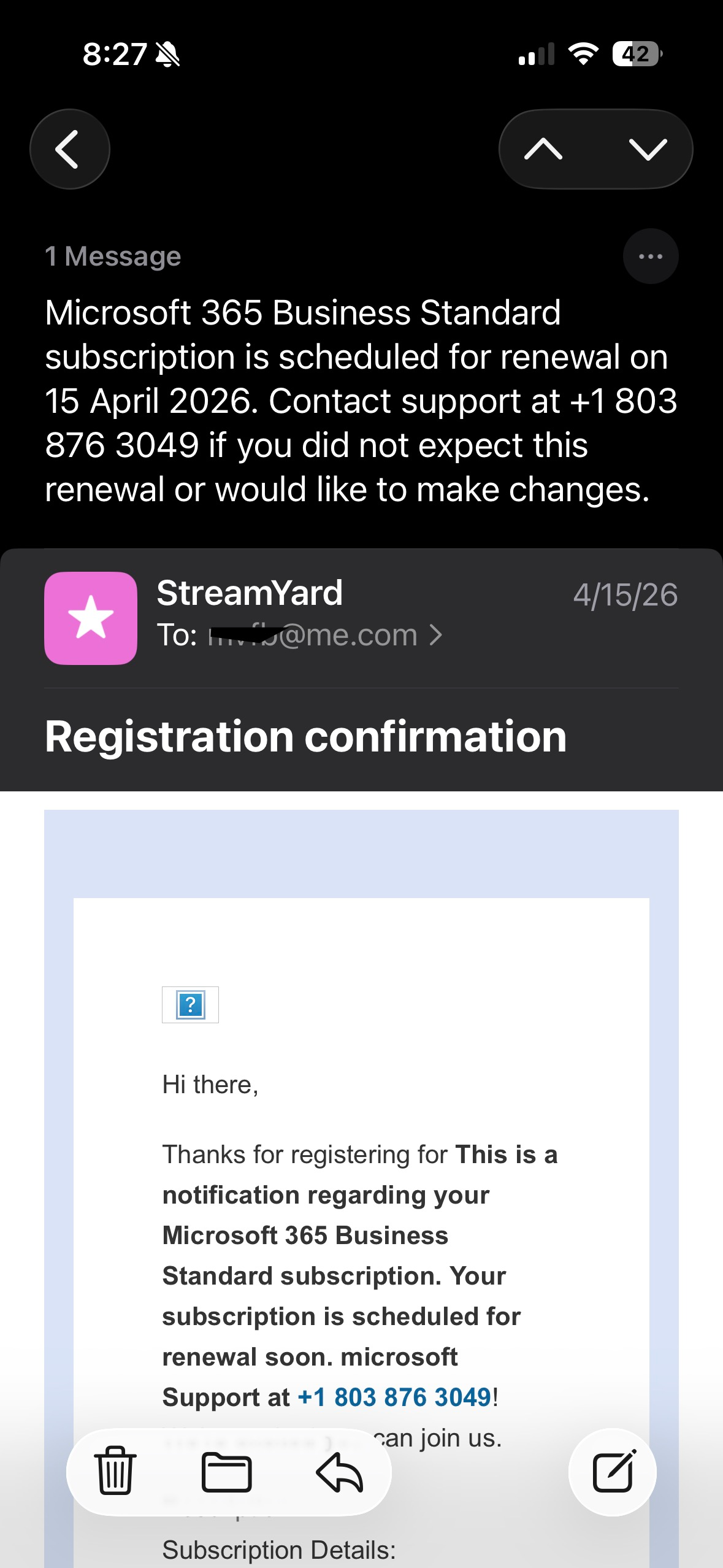
Apple Intelligence summarized it confidently: subscription renewing April 15, the scammer's phone number surfaced as support.
The contextual weirdness — wait, why is StreamYard telling me about Microsoft — was the only tell and the summary stripped it.
New sheriff in town
I didn't turn Gemini or Apple Intelligence on, they just showed up on my inbox one day and I decided to pay attention. These tools are sometimes "good luck opting out" rather than opt-in and they are now visibly making decisions about our inboxes and we're all just starting to notice, both as senders and as recipients.
For a decade we've been asked "How do I land in Primary?"
The question is now changing.
How do you use AI in your email flow? What have you noticed in your own inboxes?